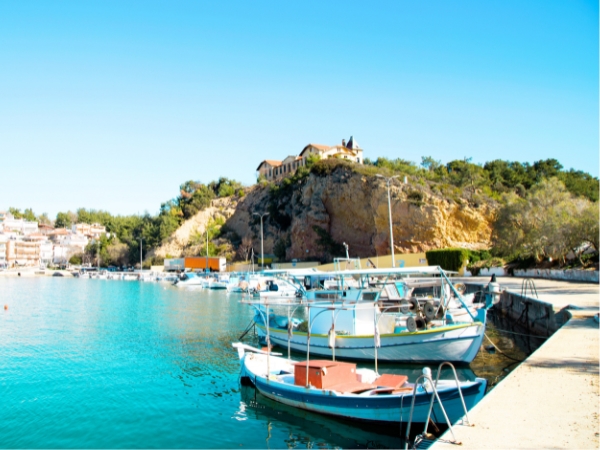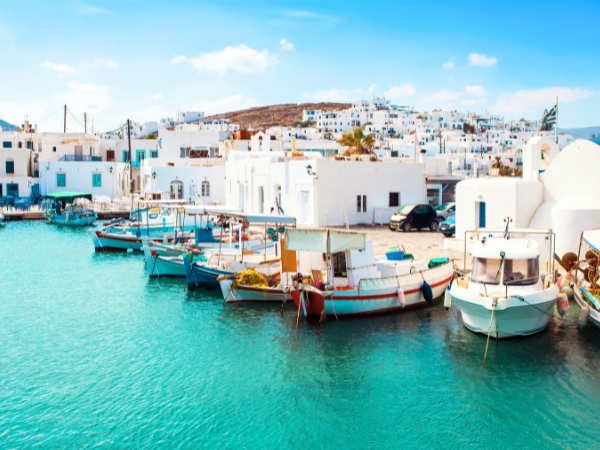
Renting a car in Greece is the definitive way to unlock the true essence of this Mediterranean paradise. While the country possesses a reliable public transport network, nothing compares to the autonomy of navigating the olive-grove-lined roads of the Peloponnese or discovering a secluded cove on the coast of Crete that remains untouched by tour buses.
A rental car transforms a standard vacation into a personalised adventure, allowing you to stop at a roadside taverna on a whim or watch the sunset from a remote mountain chapel. However, once you arrive at the bustling city centres or quaint island villages, the practicalities of parking in Greece become a primary concern. This guide provides you with essential tips on how to find the best parking spots in the mainland and the islands.
Navigating the mainland requires a keen eye for road markings, which follow a strict colour-coded system. In most major cities, you will encounter white, blue, and yellow lines painted on the tarmac. Generally, white lines indicate free parking zones where you can leave your vehicle without charge, provided there are no additional signs indicating time limits.
Blue lines signify paid parking zones, usually enforced during business hours. In these areas, you must either purchase a ticket from a nearby automated machine or use a digital payment method. Yellow lines are no-parking zones. These are reserved for emergency vehicles, residents, or commercial loading, and parking here will almost certainly result in a fine or your vehicle being towed.
Athens operates on a slightly different logic that often catches visitors off guard. In the capital, the yellow markings remain strictly off-limits to everyone. However, the blue lines are actually reserved exclusively for permanent residents who possess a special permit. This is a reversal of the national standard, so it is vital to double-check local signage.
Tourists must look for the white lines, which in Athens represent the paid visitor zones. Paid parking hours in the city are typically enforced from 9:00 am to 9:00 pm on weekdays and from 9:00 am to 4:00 pm on Saturdays. Outside of these hours, and all day on Sunday, parking in the visitor zones is usually free of charge.
Thessaloniki and other large mainland hubs like Patras follow the standard national colour scheme but often suffer from extreme congestion. While street parking is significantly cheaper, costing approximately €1 to €2 per hour, in these urban environments, it is often more sensible to utilise private "Polis" or underground car parks.
These facilities are clearly marked with a large "P" on a blue background and offer a secure alternative to hunting for a street spot. Private garages provide peace of mind, especially if you are leaving luggage in the car, though the hourly rate will be slightly higher at around €1.50 to €3.00, and daily rates ranging from €15 to €25.
When visiting the dramatic rock formations of Meteora, parking is surprisingly accessible but requires careful timing. Each of the six active monasteries has its own dedicated parking area, which is generally free for visitors to use. However, these small lots fill up rapidly with tour buses and rental cars by mid-morning. If the official lot is full, it is common to park along the side of the narrow winding roads, but you must ensure your vehicle does not obstruct traffic or block the passing buses.
Similarly, at the archaeological site of Delphi, there is a free public parking lot situated directly across from the main entrance and museum. While this lot is spacious, the volume of visitors in the summer means it can reach capacity by 10:00 am. If you cannot find a space at the site, you may need to park in town and walk roughly fifteen minutes to the ruins. Ancient Olympia and Epidaurus also provide large, well-signposted free parking areas, making them some of the most driver-friendly historical destinations on the mainland.

Parking on the Greek islands is a different experience altogether, governed more by geography than by strict metropolitan rules and colour-coded schemes. Most traditional island villages, known as the Chora, are intentionally pedestrianised or have streets so narrow that cars are physically unable to enter.
Consequently, the local authorities provide large municipal parking lots on the periphery of these settlements. When arriving at a popular destination like Mykonos or Santorini, your best strategy is to head for these public lots. Many are free of charge, though they can fill up rapidly during the peak summer months of July and August, so you have to arrive early.
Coastal parking at the islands' world-class beaches also requires a bit of local savvy. While many organised beaches offer dedicated parking areas, you may find yourself parking on dirt tracks or wild spots near the shore. Always ensure you are not blocking access for emergency vehicles or local farmers.
On islands like Crete or Rhodes, parking is generally more relaxed than on the mainland, with fewer metered zones. However, in historic harbour towns like Chania or Rhodes Town, the same city rules apply: look for the blue or white lines and be wary of the yellow no-parking zones.
One peculiar island rule involves alternate-side parking based on the month. You may see signs with a Roman numeral "I" or "II" inside a red circle with a slash. The "I" indicates no parking on that side of the street during odd-numbered months, while the "II" refers to even-numbered months. This system is designed to keep narrow island arteries flowing by alternating which side of the street is occupied by parked cars. It is a subtle detail that is easy to miss but vital for avoiding a ticket.

Successfully managing your parking in Greece is the final piece of the puzzle for a perfect Mediterranean vacation. By understanding the colour-coded lines of the mainland, respecting the peripheral parking systems of the islands, and utilising modern digital tools, you can navigate the country with the confidence of a local. The minor effort required to learn these rules is a small price to pay for the unparalleled joy of driving through the Greek landscape, from the sun-drenched coastlines to the rugged heart of the mountains.
There is truly no substitute for the freedom that a rental car provides. It allows you to escape the crowded tourist hubs and find the authentic Greece that exists just beyond the next bend in the road. Now that you are equipped with the knowledge to park safely and legally, nothing is holding you back. Book your car on Final Rentals today, embrace the open road, and prepare for an unforgettable journey through one of the most beautiful countries in the world.