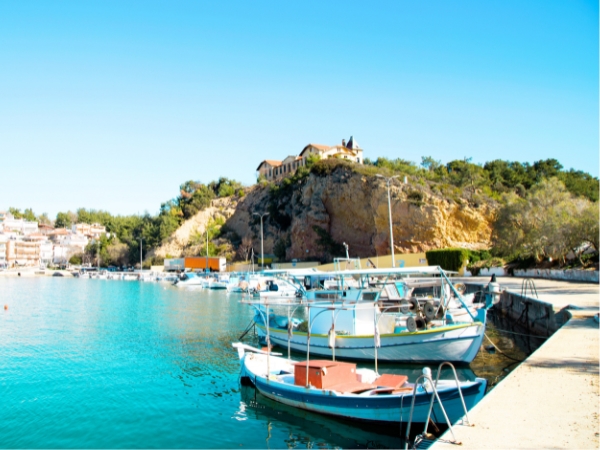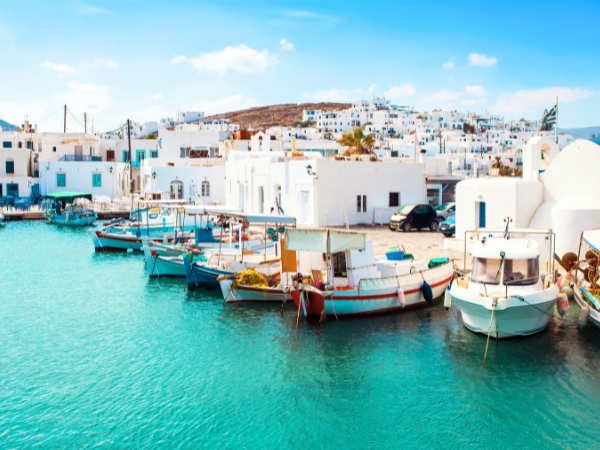
The allure of Greece often lies just beyond the reach of public transport. While the bus networks in major cities are functional, the true magic of the Hellenic landscape is found in the hidden coves of the Peloponnese, the mountain villages of Epirus, and the stunning monasteries of Meteora.
To reach these remote wonders, driving in Greece is not merely a convenience but a necessity for adventurous travellers. Navigating this historic land by car offers a level of autonomy that allows you to bypass the crowded tourist trails and set your own pace under the Mediterranean sun.
However, some visitors are apprehensive about getting behind the wheel, fueled by stories of chaotic traffic and aggressive manoeuvres in the country. While driving in Greece can be challenging for tourists, it is manageable, and the road network has undergone a significant transformation over the last decade, improving motorways and rural roads.
This guide provides ten practical driving tips to help you traverse the Greek roads like a local. By preparing yourself with a few key insights into the legal requirements and local customs, you can ensure that your journey through the cradle of Western civilisation is both safe and exhilarating.
One of the most confusing factors for those driving in Greece is navigating the roundabouts. In most countries, the rule of thumb is that vehicles already circulating within the roundabout have the right of way. In Greece, the rule is often the opposite. Unless there is a Yield or Stop sign at the entrance, the vehicle entering from the right has priority. This means those inside the circle must stop to allow newcomers in. Always approach roundabouts with extreme caution and look specifically for the inverted red and white triangle sign. If it is absent, be prepared to yield to entering traffic.
A landmark change in Greek traffic law introduced a standard 30 km/h speed limit on single-lane urban streets and residential areas. This move follows the lead of other countries and is strictly enforced by a new network of over 4,000 digital speed cameras. The goal is a shift toward a calm driving culture, and the fines for exceeding these new limits are substantial. While the open roads and motorways still allow for higher speeds, you must carefully monitor your speedometer the moment you cross into an urban area.
In rural Greece and within the narrow streets of traditional villages, formal road markings can be sparse. In the absence of Stop signs or Priority Road indicators, the "Priority from the Right" rule is absolute. This means that at a T-junction or a crossroad where no signs are present, you must yield to any vehicle approaching from your right-hand side. Tourists often find this daunting, but in practice, it leads to a slower, more deliberate pace in residential zones. When in doubt, slow down and establish eye contact with other drivers.
In many cultures, the use of car horns is viewed as an act of aggression or warning. However, in Greece, it is used far more colloquially. A short, sharp "beep" is frequently used as a friendly greeting, a way to signal one's presence before a blind mountain curve, or a polite nudge to a driver who hasn't noticed the traffic light has turned green. While the law officially prohibits unnecessary honking in urban areas, you should learn to distinguish between a "warning" honk and a "frustration" honk to avoid confusion.
In many parts of Greece, hazard lights are used as a universal signal. You will frequently see cars double-parked on busy streets with their hazards flashing while the driver pops into a bakery or pharmacy. While this is technically illegal, it is a ubiquitous part of the driving landscape. If you see a car with its hazards on in front of you, do not assume it has broken down. They have likely just stopped. Keep your distance, check for passing motorcycles, and move around them when it is safe to do so.

Motorcycles and scooters are the lifeblood of Greek urban transit, and they operate with a degree of fluidity that can be startling to foreign drivers. Filtering, where bikes move between lanes of stationary or slow-moving traffic, is standard practice and was officially integrated into the traffic code. When you are stopped at a red light or moving through heavy traffic, expect motorbikes to appear on both sides of your vehicle. Always check your wing mirrors and blind spots before changing lanes or opening your car door.
While the legal framework in Greece grants pedestrians absolute priority at zebra crossings, the cultural reality often lags. Greek drivers do not always stop automatically when a pedestrian steps toward the kerb. Conversely, if you are the one driving and you slam on your brakes to let someone cross, you run a high risk of being rear-ended by a local driver who did not anticipate the stop. If you intend to stop for a pedestrian, signal your intention early by tapping your brakes or using your indicators to alert the traffic behind you.
If your itinerary takes you into the Pindus Mountains or the rugged interior of Crete, you will encounter steep, winding descents that can be hard on a vehicle’s braking system. A common mistake made by tourists is riding the brakes the entire way down a mountain pass, which can lead to brake fade and mechanical failure. Instead, use engine braking by shifting into a lower gear. This allows the engine to control the vehicle's speed, keeping your brakes cool and responsive for when you truly need them.
The Greek police are known to conduct spot checks, particularly on rental vehicles. By law, every car in Greece must be equipped with three specific safety tools: a warning triangle, a portable fire extinguisher, and a first-aid kit. When you collect your rental car, do not simply take the agent's word for it. Open the boot and verify that all three items are present and that the fire extinguisher is within its expiration date. Being caught without these items can result in an on-the-spot fine that can affect your travel budget.
Parking in Greek cities like Athens or Nafplio can be a challenge. The rules are enforced through a colour-coded system on the pavement. Blue lines generally indicate zones for residents or paid parking where you must purchase a ticket via a local kiosk or a mobile app. White lines typically signify free parking, though these are rare in city centres. Yellow lines indicate no-parking zones, usually reserved for emergency access, bus stops, or loading areas. Parking in a yellow zone often results in the police removing your number plates, a common Greek penalty that requires a trip to the station and a significant fee to resolve.

Driving in Greece is an invitation to explore one of the world's most beautiful countries on your own terms. From the sun-bleached ruins of ancient Delphi to the azure waters of the Voidomatis River, the most iconic sights of Greece are best reached by car. While the local road customs and the updated traffic regulations may require a brief period of adjustment, the rewards of having your own vehicle are unparalleled.
By staying alert, respecting the new speed limits, and embracing the slightly more vocal driving culture, you can navigate the Hellenic landscape with ease. The freedom to stop at a roadside taverna or a deserted beach is what turns a standard vacation into a true odyssey. The open road is calling. Book your car on Final Rentals today and start your Greek driving adventure!